


06 FEBRUARY 2026
Choosing the right early years setting and working closely with staff can make a meaningful difference to your child’s wellbeing, confidence, and development. When families and practitioners collaborate, children benefit from consistent support, clear communication, and a shared understanding of their needs. In this article, written by Dingley’s Promise, we explore how to choose a setting that’s right for your family and how strong partnerships with staff can help your child thrive.
Choosing an early years setting
- Location: closer to home or work
- Hours: do they match your work pattern?
- Priorities: small setting, strong outdoor provision, types of activities offered
What questions ask when visiting an early years setting
- How do you support children during transitions (drop‑off, toileting, moving rooms)?
- How do you adapt activities for different needs?
- What does a typical day look like?
- How are children encouraged to develop independence?
- Have you supported children with similar needs to my child?
- How do you work with external professionals (speech therapists, health visitors)?
- What happens if a child needs more help than expected?
Building a positive partnership with staff
Questions to ask your child’s key person:
- How is my child settling, and what helps them feel comfortable?
- This helps you understand routines, interests, and comfort strategies.
- What are my child’s strengths, and how do you build on them?
- Focusing on strengths supports confident, positive development.
- What goals are you working on with my child?
- Shared goals help you understand how learning is supported day to day.
- How do you adapt activities if my child needs extra support?
- This gives insight into inclusion and practical strategies.
- How can we communicate regularly?
- You might choose daily chats, a communication diary, or a digital app.
Remember you and the practitioners are a team. Your knowledge of your child is as important as their professional expertise.
How SEND support works in early years settings
The role of the SENCO
- The Special Educational Needs Coordinator (SENCO) leads on inclusion and ensures staff feel
- confident in meeting diverse needs. They:
- Coordinate assessments and support plans
- Work with parents, therapists, and professionals
- Review progress and adjust support as needed
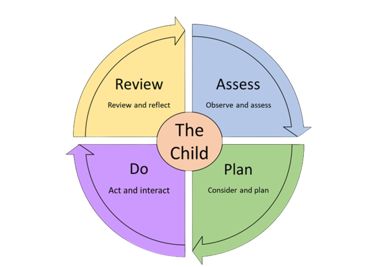
The graduated approach
SEND support follows a cycle of:
Assess: Understanding strengths and needs
Plan: Agreeing outcomes and strategies
Do: Putting support in place
Review: Evaluating progress and next steps
This ensures support is flexible, responsive, and centred on your child.
Provision and funding
Local authorities set out what adaptations and strategies should be offered without extra funding, known as Ordinarily Available Provision. This may include visual timetables, sensory supports, flexible routines, or alternative communication strategies. If a child needs more than this, settings may apply for additional funding. This may support specialist equipment, extra staff hours, reduced ratios, or training for staff on specific strategies.
Signposting and further support:
Local Authority SEND webpages – information on policies, funding, and Early Help.
Your setting’s SEND information – including SENCO contacts and support pathways.
Dingley’s Promise family resources – national guidance, training, and practical SEND support
for families and settings. https://dingley.org.uk/resources-for-families/