


Children's Mental Health Support Pack
Knowing the signs
Do you suspect that your child might be struggling with mental health? Each child is unique and mental health challenges can present in many ways. Recognising the unique needs of neurodiverse children is fundamental in supporting their mental well-being, and influencing their emotional, social, and cognitive development.
Watch this short video to learn how to recognise the signs.
Anxiety & school
For neurodivergent children, school can provide a whole host of challenges which can cause anxiety. Our supportive strategies help bridge the gap, reducing anxiety through neuro-affirming advice and dedicated support.

Everything you should know about EBSA
This article explores advice and strategies to support neurodivergent learners at risk of EBSA.

Navigating the meltdowns
After-school meltdowns are common. Learn how to support your child through decompression with simple, calming strategies that nurture emotional well-being.

Predictable transitions
In this episode of SENsational, we explore approaches to support school transitions and the challenges children from mainstream settings face when starting a new SEN school.
Talking to your school
Children show us they're struggling in many different ways, and it's important to look at the whole picture rather than isolated incidents. Some signs to watch for include:
Academic changes: A sudden drop in grades, difficulty concentrating, incomplete work, or avoidance of certain subjects or tasks they previously managed well.
Social and emotional indicators: Withdrawal from friends, reluctance to participate in activities they used to enjoy, increased anxiety around school (particularly Sunday evenings or Monday mornings), frequent visits to the nurse's office, or changes in friendship groups.
Behavioural changes: Increased irritability, emotional outbursts that seem disproportionate to the situation, difficulty managing transitions, rigid thinking or inflexibility, or behaviours that seem designed to avoid certain situations.
Physical signs: Changes in sleep patterns, appetite, complaints of headaches or stomach aches (particularly on school days), appearing tired or lacking energy, or increased fidgeting and restlessness.
Communication from your child: Statements like "I can't do this," "everyone hates me," "I'm stupid," or "I don't want to go to school" should always be taken seriously, even if they seem dramatic.
The key is noticing changes or patterns rather than one-off incidents. Trust your instincts as a parent or teacher – if something feels different or concerning, it's worth exploring.
Mainstream schools have various levels of support available, though this can vary between schools. Support typically includes:
Universal support: Quality First Teaching with differentiation, clear routines and structure, visual timetables, reasonable adjustments to the environment (like preferred seating), and whole-class approaches to wellbeing.
Targeted support: Small group interventions for literacy, numeracy, or social skills; time with a Learning Support Assistant; access to a quiet space or sensory area; individual behaviour plans or reward systems; regular check-ins with a trusted adult.
Specialist support: Involvement from the school's Special Educational Needs Coordinator (SENCo), Educational Psychology assessments, referrals to external services like CAMHS (Child and Adolescent Mental Health Services), ELSA (Emotional Literacy Support Assistant) sessions, mentoring programmes, or adjustments through an Education, Health and Care Plan (EHCP) if needs are significant.
Pastoral support: Access to a school counsellor, pastoral lead, or wellbeing team; peer mentoring schemes; social skills groups; or support around specific issues like bereavement, anxiety, or family changes.
Environmental adjustments: Movement breaks, alternative lunch arrangements, modified timetables, or use of sensory tools.
It's important to note that schools work within their resources and expertise, so not every school can provide everything. However, they have a legal duty to make reasonable adjustments and to identify and support children with special educational needs.
Who to approach:
- Your child's class teacher or form tutor is usually the best first point of contact – they see your child daily and can share observations.
- The SENCo (Special Educational Needs Coordinator) oversees additional needs and can discuss formal support.
- The pastoral lead, Head of Year, or wellbeing coordinator can address emotional and behavioural concerns.
- The Headteacher or Deputy Head if concerns are serious or you're not getting adequate responses from others.
How to start the conversation:
Be honest and specific. Rather than just saying "they're struggling," share concrete examples: "Over the past month, Sam has been saying he has stomach aches every Monday morning and has started refusing to get ready for school. His teacher mentioned he's been very quiet in class, which is unusual for him."
Frame it as a partnership: "I'm concerned about some changes I'm seeing at home, and I wondered if you're noticing anything similar at school. I'd like to work together to understand what's happening and how we can help."
Request a proper meeting rather than trying to have important conversations at the classroom door. You might say: "Could we arrange a time to meet? I need about 20-30 minutes to discuss some concerns about [child's name]."
Come prepared with examples, dates, and any relevant information (like family changes, medical issues, or previous assessments). But you don't need to have all the answers – the meeting is to work things out together.
Be clear about what you're asking for, even if it's just: "I don't know exactly what support she needs, but something isn't right and I need help figuring it out."
Schools take confidentiality seriously, but there are important things to understand:
Who will know: Information about your child's needs is typically shared on a "need to know" basis. This usually includes:
- The class teacher and any teaching assistants working with your child
- The SENCo and senior leadership as appropriate
- Other staff who teach your child (in secondary settings)
- Staff who need to know for safety reasons (like the First Aider if there are medical needs)
How information is stored: Schools keep records securely, usually on a password-protected system. Your child will likely have a file or profile that documents their needs and support strategies.
Your rights: Under GDPR, you have the right to see what information the school holds about your child. You can request this at any time.
When confidentiality might be broken: Schools have a legal duty to share information if there are safeguarding concerns – for example, if a child is at risk of harm or discloses abuse. They should always tell you if they're making a referral unless doing so would put the child at greater risk.
External agencies: If the school involves outside professionals (Educational Psychologist, CAMHS, Social Care), they will normally ask for your consent first. You have the right to say no, though this might limit the support available.
What you can do: At the start of any conversation, you can ask who will be told about what you're discussing. You can also request that certain information is kept to specific people, though the school will need to balance this against their duty of care.
It's worth building a trusting relationship with your school – most educators genuinely want to help and will handle sensitive information with care and respect.
Effective support is not a "set it and forget it" arrangement – it requires ongoing monitoring and adaptation. Here's how this typically works:
Regular communication: Establish how and how often you'll communicate. This might be a weekly email, a home-school diary, brief catch-ups at pick-up time, or scheduled monthly meetings. Be clear about what works for both parties.
Clear targets and goals: Any support plan should have specific, measurable goals. Rather than "improve behaviour," it should be something like "reduce classroom incidents from 5 per week to 2 or fewer" or "complete 3 out of 4 homework tasks independently." This makes progress easier to track.
Review meetings: Most formal support plans (like Individual Education Plans or Behaviour Support Plans) are reviewed termly, but you can request more frequent reviews if needs are changing rapidly. Come to these meetings with your own observations from home.
Data and evidence: Schools should be able to show you what they're monitoring (academic progress, behaviour logs, attendance records, wellbeing check-ins) and share this data with you. Ask to see evidence of both successes and areas still needing work.
Flexibility and responsiveness: Support should evolve. If something isn't working after a reasonable trial period (usually 6-12 weeks for interventions), speak up. Similarly, if your child's circumstances change at home (family stress, bereavement, new diagnosis, medication changes), inform the school immediately so adjustments can be made.
Your child's voice: As children get older, involve them in reviews where appropriate. They often have the clearest insight into what helps and what doesn't.
Document everything: Keep your own records of meetings, agreements, and concerns. This isn't about being adversarial – it's about ensuring everyone remembers what was agreed and can track what's been tried.
Escalation process: Understand what to do if you feel support isn't adequate or progress isn't happening. This might involve requesting Educational Psychology involvement, asking for an EHCP assessment, or in some cases, formal complaints procedures.
Celebrating success: Progress tracking shouldn't only focus on problems. Make sure you're also noting and celebrating improvements, no matter how small. This keeps everyone motivated and reminds your child that growth is happening.
Understanding big feelings
Supporting your child when they are struggling with their mental health can feel overwhelming, isolating, and exhausting. You’ll find understanding, guidance, and reassurance that you’re not alone, and that what you and your child are experiencing is real and manageable with the right support.

Navigating self-harm
Here, we explore how self-harm presents in children and young people, why it happens, and how you can be supportive.
Supporting wellbeing
Creating a supportive and nurturing environment, promoting open communication, and fostering strong connections with you, their friends and teachers are key components in promoting positive mental health outcomes for children.

Healthy sleep
This article highlights the impact of healthy sleep on managing mental health and wellbeing.

Promoting regulation
In this podcast episode, we explore what emotion coaching is and strategies that you can use to support your child.
Mindful exercises
Mindfulness is an exercise that is practiced to make you feel fully present and engaged in the current moment. It involves paying attention to your thoughts and feelings without judgment, accepting them as they are, and feeling more in-tune with your body, mind and the environment.
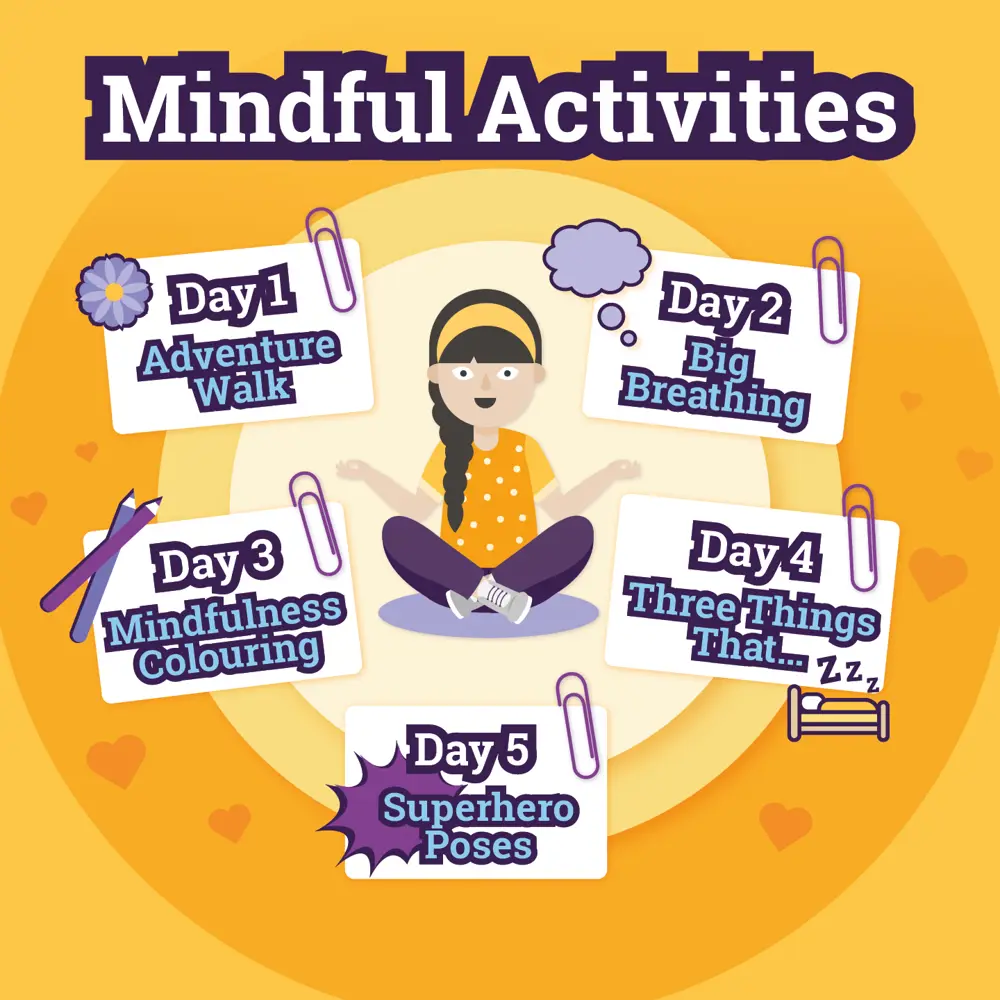
5 Mindfulness activities
Looking for mindful activities and exercises to support your child's mental well-being? Download our '5 Mindfulness Activities', created by Bethany Dyke, Assistant Psychologist for our Group.

Full body calm excercise
Our downloadable full body calm exercise teaches a practical approach for navigating overwhelm and anxiety.

At what point should you seek help?
Here, Bridgitte, our Psychologist, covers some of the signs to look out for and top tips for understanding when is the right time to seek support for your child's mental health.